About Maeve Downey
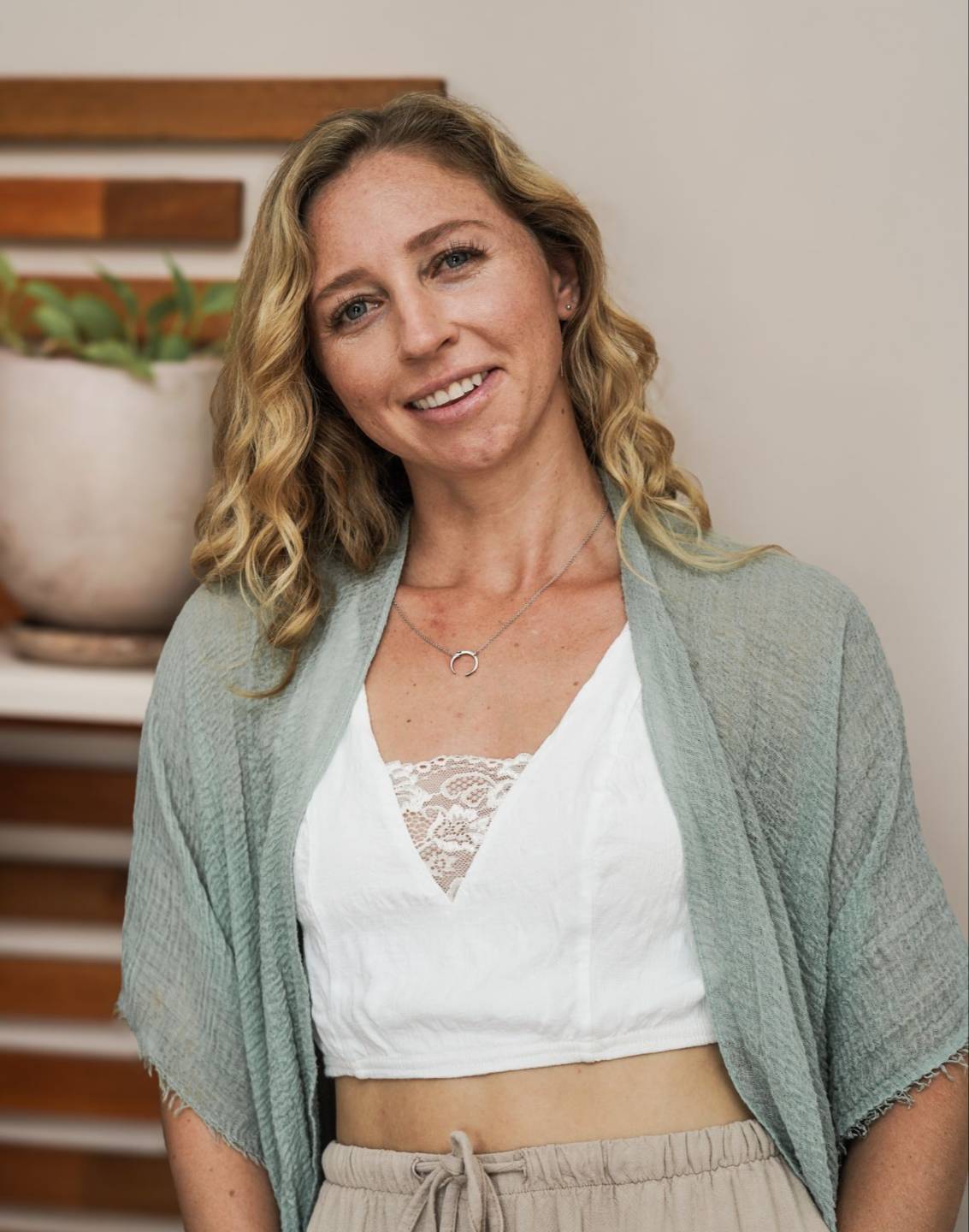
I’ve always been fascinated by how the mind and body work, how they interact, and how that shapes the way we experience being human.
That curiosity originally led me down the science path. My education and background are rooted in science and biochemistry, and I loved understanding the mind and body mechanically- breaking things down and figuring out how everything worked.
But eventually, something felt like it was missing.
I was learning so much about the body and brain, but most of it was staying in my head. I understood things intellectually, but there was a gap between knowing about an experience and actually understanding it from the inside.
So after graduating, spending some time working in the science world and still feeling like something was missing, I signed up for a medical study at Johns Hopkins to make enough money to buy a plane ticket to Thailand, and off I went.
I ended up spending more than a decade living in Thailand, where I fell in love with the culture, teaching, Buddhism, and eventually meditation and mindfulness.
For the first time, I was turning the spotlight of my attention inward and noticing how my mind worked from a new angle- my patterns of thinking, the ways I responded to stress, and how all of it showed up in my body.
Yoga took that awareness a step further. It taught me how to slow down, pay attention to sensation, and practice being with what I was experiencing rather than constantly trying to change or escape it.
These practices really influenced me. But eventually, I reached another point where I felt like something was still missing.
I could be very aware of my patterns. I could recognize when I was stressed or triggered and understand why I was responding in certain ways. But awareness didn't always mean I could change the experience.
I could know intellectually that I wanted to respond differently, yet the same reactions and patterns would still show up almost automatically.
Then I experienced my first conscious connected breathwork journey.
For so long, I had been trying to understand myself by thinking about my experiences—trying to figure out why I felt, thought, or reacted the way I did. Breathwork opened up a different kind of conversation. Instead of only thinking my way through an experience, I could actually feel it.
It was less about figuring myself out and more about experiencing myself.
That experience eventually led me to somatic therapy, which helped me understand the deeper relationship between our experiences, protective patterns, nervous system responses, and the body.
This was the piece I had been looking for: a way to develop a different relationship with my own experience.
I started to realize that I didn't always need to fight the parts of myself I wanted to change. With awareness, curiosity, and the right tools, I could begin to work with my experience instead of constantly working against it.
That is what I hope to offer the people I work with.
I don’t see myself as someone who has figured everything out or reached some permanent state of being “healed”. I still get overwhelmed, activated, and caught in old patterns sometimes.
What has changed is my relationship with those experiences.
I have more awareness, more understanding, more tools, and more trust that I don't have to fight every uncomfortable experience that arises.
My work is about helping others build that same relationship with themselves. Through breathwork and somatic practices, we can begin to understand what is happening beneath the surface. Not so that we can control ourselves perfectly, but so that we can have more choice in how we experience and respond to life.
My Approach
The Body Leads the Way
At the foundation of everything I do is one belief: your own nervous system, body, and breath hold an intelligence that knows the way forward. My role isn't to fix you or to hand you an exact map. It's to help you reconnect with that intelligence, learn to listen to it, and feel supported as you move into the next version of yourself.
My work brings together somatic therapy, rooted in the principles of Somatic Experiencing, and conscious connected breathwork. Both work from the body up rather than from the mind down. And both are grounded in a simple idea that the science increasingly supports: many of the patterns we struggle to think our way out of live in the nervous system, and that is where they can genuinely shift.
Somatic Therapy and the Nervous System
My somatic work is grounded in Somastery, a somatic therapy training with Kaira Mayestra, which builds on the principles of Somatic Experiencing (SE). SE was developed over several decades by Dr. Peter Levine. It is a body-oriented approach that guides attention to internal sensation, both visceral (interoception) and muscular or postural (proprioception), rather than working primarily through thoughts or the retelling of a story (Payne, Levine & Crane-Godreau, 2015).
The nervous system is designed to move in waves. It rises into activation (the sympathetic, fight-or-flight side) when something is needed, uses that energy, and then settles back toward rest. When an experience is too much, too fast, or goes on for too long, and the body can't complete its natural protective responses, like fight, flight, or freeze, that wave can get stuck midstream. The body keeps holding the unfinished survival energy. Later, anything even slightly similar can switch it back on, often below conscious awareness. This is why we can understand a pattern perfectly in our minds and yet still feel it running on autopilot in the way that we act or feel.
Over time, these experiences also shape what we believe. Not only the beliefs we can name in our heads, but the deeper ones the body holds as true: that we can't trust others, that we are only worthy if we are productive, that we aren't safe to slow down, and so on- these are unique to each of us. You can think of these as agreements the nervous system has made with life, based on what it once needed to do to stay safe. They made sense at the time. But they keep running long after the situation has changed, steering how we react, what feels possible, and what we keep returning to even when we genuinely want something different.
Because these agreements live in the body, insight alone very rarely shifts them. Somatic therapy works at the level where they were formed. By slowing down and following sensation, posture, impulse, and emotion as they arise, we can find where an old belief is being held, let the body finish what it couldn't finish before, and give it a new experience of safety and choice. And agreements can always be renegotiated. As the body feels something different often enough, the belief loosens, and a new way of responding has room to become the new autopilot.
SE frames healing as allowing those thwarted protective responses to complete and that excess activation to discharge and settle. In session, this happens slowly and in small doses. We build resources first, so there's a felt sense of safety and support in the body. Then we touch into what's difficult a little at a time and return to what feels steady, gently widening the range the nervous system can move through. The aim isn't to stay calm all the time. It's capacity and flexibility: a nervous system that can rise to meet life and come back down again without getting stuck at either end.
Research on SE is still developing, partly because the work is so individual that it doesn't fit neatly into standard research models, but the early findings are encouraging. A 2021 scoping review found preliminary evidence of positive effects on post-traumatic symptoms, along with improvements in emotional and physical symptoms and well-being, in people with and without a trauma history (Kuhfuß et al., 2021).
Breathwork and the Science of the Breath
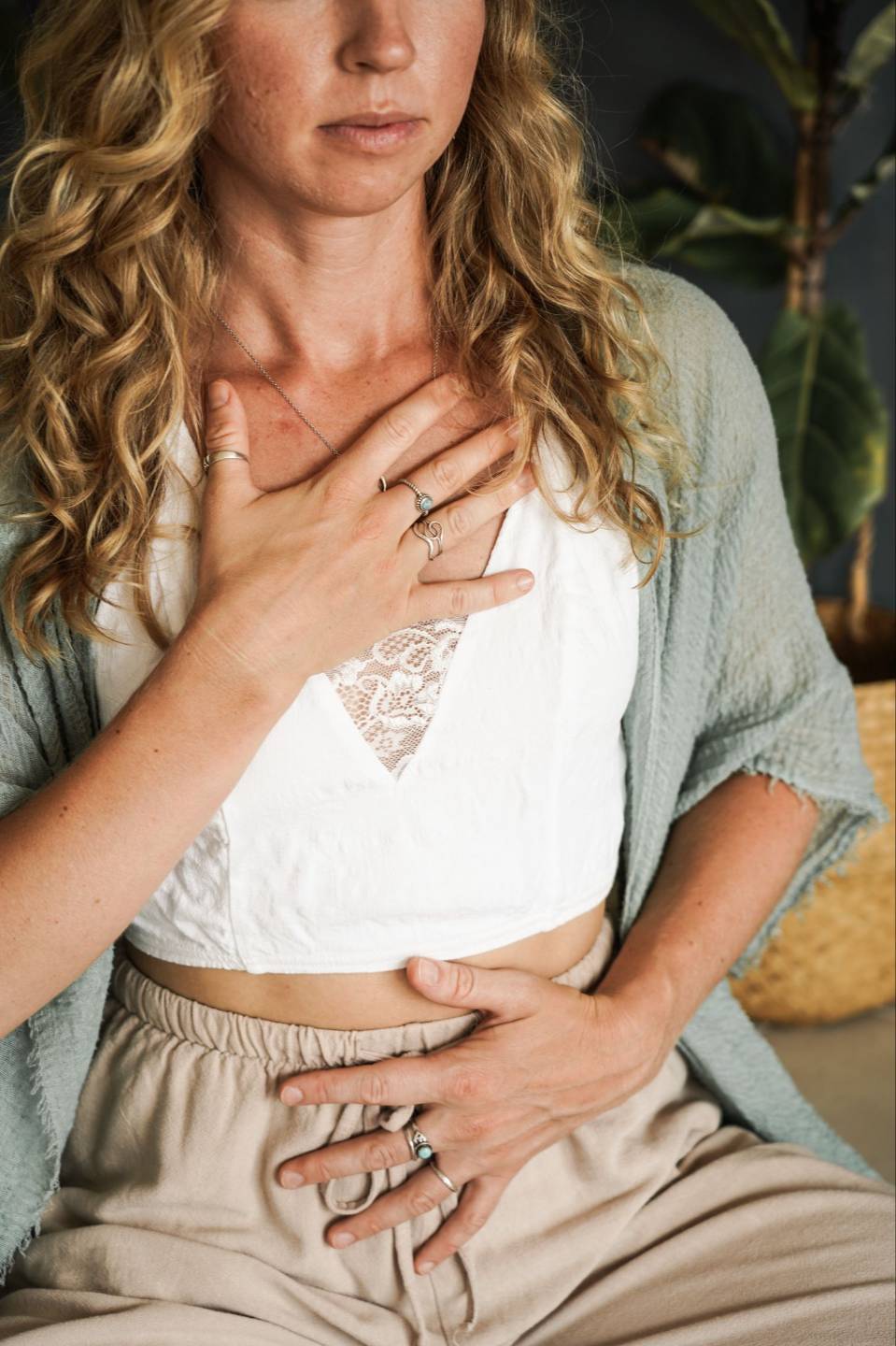
The breath is the one function of the autonomic nervous system we can steer on purpose, which makes it a direct line between conscious choice and the body's automatic states. How we breathe changes how we feel, and how we feel changes how we breathe.
Slow, diaphragmatic breathing creates pressure changes in the chest and belly that engage the vagus nerve and signal the parasympathetic "rest and digest" branch that it's safe to settle. A systematic review of slow breathing (under 10 breaths per minute) found it increases heart rate variability, a key marker of a flexible, responsive nervous system, along with shifts in brain activity and psychological state (Zaccaro et al., 2018). Nasal breathing and long, sighing exhales add to that sense of ease.
Conscious connected breathwork, the method I train facilitators in, uses a continuous, circular rhythm with no pause between inhale and exhale. As carbon dioxide levels shift, people often feel tingling, waves of energy, and emotion rising more easily. Attention tends to move out of familiar mental loops and into sensation and a more spacious awareness. This gives us a way to meet what has been held in the body through feeling rather than through the old storyline. Every journey begins by building safety, and the breath never creates anything that isn't already there. It reveals what's ready to be met.
The research is encouraging and growing quickly. A 2023 Stanford randomized trial found that just five minutes of daily breathwork improved mood and reduced physiological arousal more than an equal amount of mindfulness meditation (Balban et al., 2023). A meta-analysis of randomized trials that same year linked breathwork to lower stress, anxiety, and depression (Fincham et al., 2023). Research on conscious connected breathing specifically is newer, but early studies show measurable shifts in brain activity and mood after a single session (Bahi et al., 2024). Because more activating breath patterns aren't right for everyone, I screen for relevant health conditions, offer gentler options, and recommend medical clearance where needed.
What Working Together Looks Like
Sessions are client-led. I offer guidance rather than instructions, and we follow what your body brings forward at a pace that feels manageable. Some sessions are mostly breath, some mostly somatic exploration, and many weave the two together. Alongside the session itself, you'll learn simple practices to support your nervous system between sessions and long after we finish.
This work is not a replacement for medical or psychological care, and it works well alongside it. What it offers is a direct, practical relationship with your own body: more capacity and more ease.
If you'd like to explore this together, you can book a private session or start with a free connection call.
Teaching & Training
I have been teaching for 10+ years, and that shapes everything about how I work. Leading a powerful session matters. But what I care about most is that you leave with an understanding of what's happening in your own body, and practices you can come back to on your own for the rest of your life.
My own path is why I teach the science alongside the practice. When you understand why your system responds the way it does, you can meet it with curiosity instead of judgment.
My work is informed by my background in biochemistry and extensive training in mind-body practices. I am a certified yoga teacher, mindfulness teacher, Somastery practitioner, and breathwork facilitator, with training through Mindful Schools, Sacred Breath Academy, and Somastery. I am certified to teach breathwork facilitator trainings through my membership with the International Breath Foundation. This is the foundation of my Breath as a Bridge breathwork facilitator training, offered online and on Koh Samui.
Everything I teach comes back to the same belief:
There is so much more to understanding ourselves than what we can think our way through.
Sometimes the path forward starts by slowing down and tuning in to listen to what the body already knows.
Sources
Bahi, C., et al. (2024). Effects of conscious connected breathing on cortical brain activity, mood and state of consciousness in healthy adults. Current Psychology. https://link.springer.com/article/10.1007/s12144-023-05119-6
Balban, M. Y., et al. (2023). Brief structured respiration practices enhance mood and reduce physiological arousal. Cell Reports Medicine, 4(1). https://pmc.ncbi.nlm.nih.gov/articles/PMC9873947/
Fincham, G. W., Strauss, C., Montero-Marin, J., & Cavanagh, K. (2023). Effect of breathwork on stress and mental health: a meta-analysis of randomised-controlled trials. Scientific Reports, 13, 432. https://pmc.ncbi.nlm.nih.gov/articles/PMC9828383/
Kuhfuß, M., Maldei, T., Hetmanek, A., & Baumann, N. (2021). Somatic experiencing: effectiveness and key factors of a body-oriented trauma therapy. European Journal of Psychotraumatology, 12(1). https://pmc.ncbi.nlm.nih.gov/articles/PMC8276649/
Payne, P., Levine, P. A., & Crane-Godreau, M. A. (2015). Somatic Experiencing: using interoception and proprioception as core elements of trauma therapy. Frontiers in Psychology, 6, 93. https://pmc.ncbi.nlm.nih.gov/articles/PMC4316402/
Zaccaro, A., et al. (2018). How breath-control can change your life: a systematic review on psycho-physiological correlates of slow breathing. Frontiers in Human Neuroscience, 12, 353. https://pmc.ncbi.nlm.nih.gov/articles/PMC6137615/
Last updated: October 2026